
“Our History, Their Fight” Workshop Highlights Bhutanese Human Rights and Political Prisoner Issues in Cincinnati
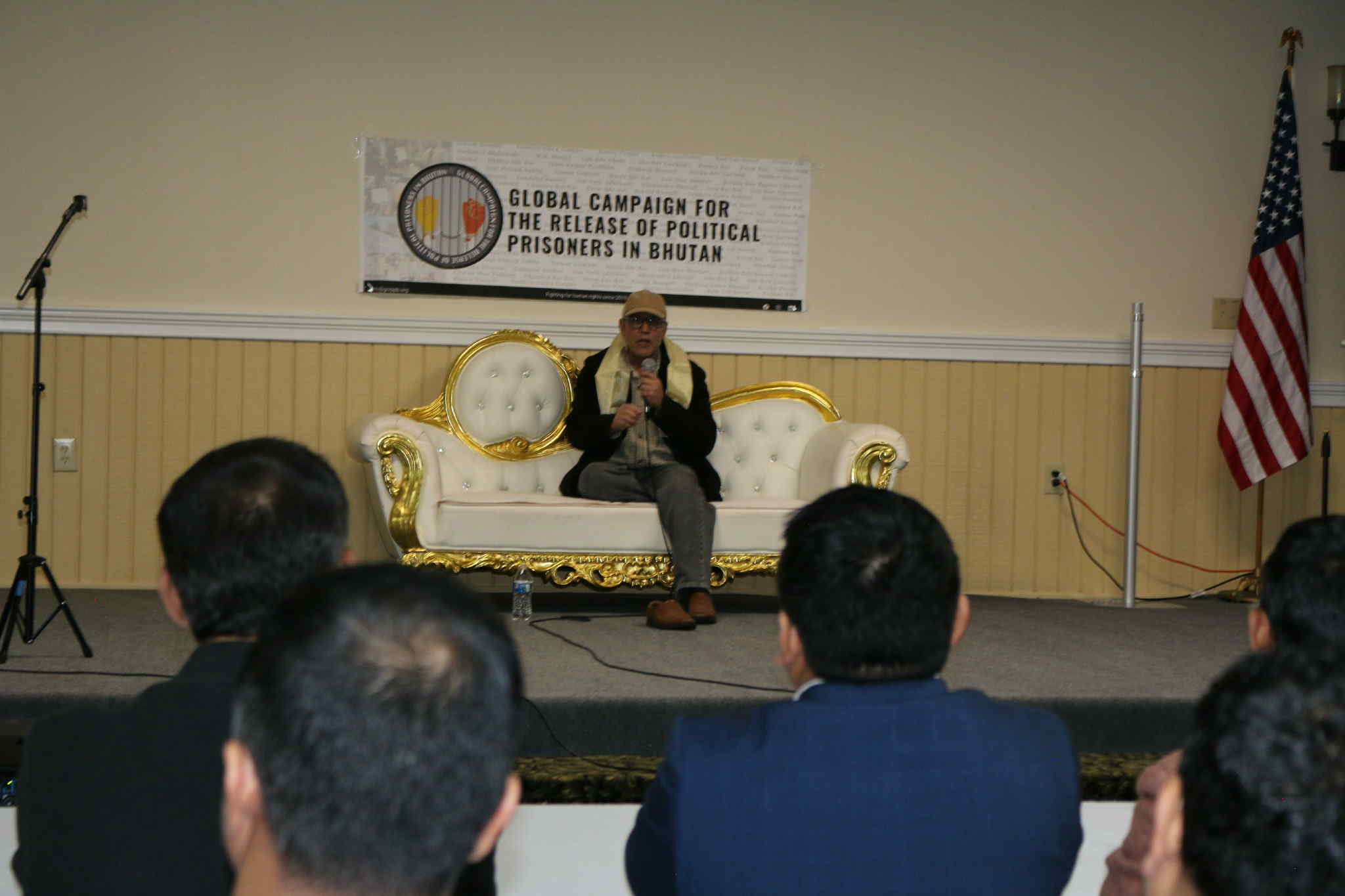
The Global Campaign to Release Political Prisoners in Bhutan (GCRPPB) held its “Our History, Their Fight” history workshop on December 14, 2025, in Cincinnati, Ohio. The program focused on the history of Bhutan, longstanding human rights concerns, and the continued detention of political prisoners. GCRPPB Youth Coordinators Bhanu Khanal, Meenakshi Niroula, and Bishal Upreti organised the event.
The workshop was part of GCRPPB’s planned awareness campaign to educate and engage younger generations within Bhutanese refugee communities worldwide on issues of political prisoners, human rights, and the broader Bhutanese refugee experience.
The program examined Bhutan’s human rights record, with particular attention to the political upheavals of the late 1980s and early 1990s and their lasting consequences. Former political prisoners and respected community leaders shared firsthand accounts and reflections on identity, displacement, and the pursuit of justice.
Hari Bangaley Adhikari, a former prisoner of conscience, torture survivor, and senior leader of Bhutan’s democracy and human rights movement during the late 1980s and early 1990s, provided a detailed account of the political climate of that era. He described his own arrests, the detention of fellow democracy leaders, and the widespread repression faced by Nepali-speaking Bhutanese communities.
Poet and Secretary of the Literature Council of Bhutan, Khem Rizal Urza, spoke on cultural legacy and the importance of unity in preserving history, language, literature, and identity within the Bhutanese refugee community.
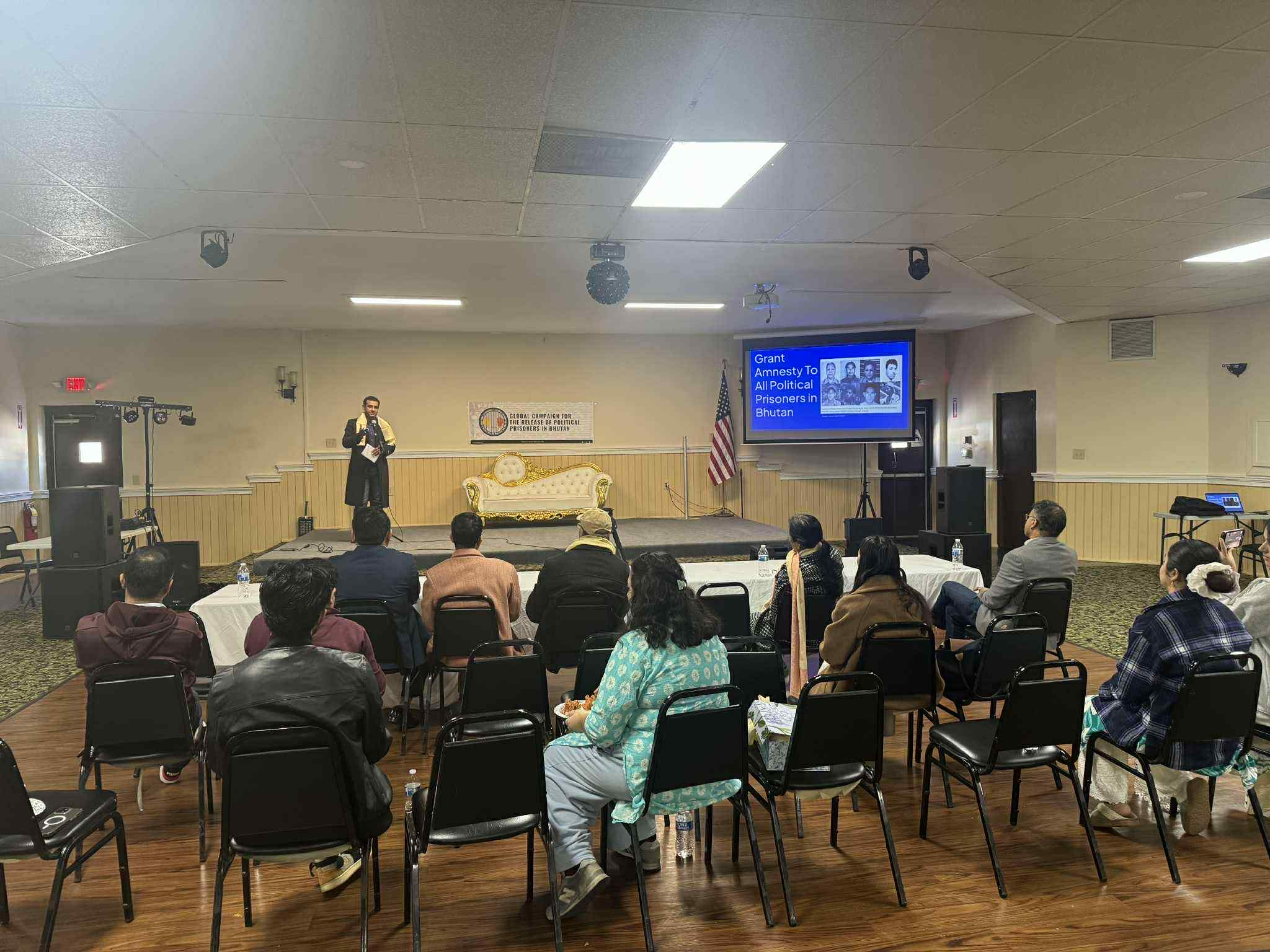
Tara Dahal, a Bhutanese American social worker, former refugee camp teacher, and Chairman of the Ohio based Nepali Language and Arts Centre, addressed the systematic suppression of cultural identity during the same period. He highlighted the banning of the Nepali language and traditional dress and the broader impact of these policies on Nepali-speaking Bhutanese.
DB Rai, President of the Global Bhutanese Organisation, discussed the current situation of Bhutanese refugees, focusing on the education and healthcare challenges faced by camp residents and children. He underscored that many of these issues remain unresolved.
Subash Acharya, a former camp secretary and Cincinnati-based Bhutanese realtor, reflected on Bhutanese-Nepali identity, exploring the community’s distinct historical experience and the cultural and social factors that define it.
Devika Khanal, a former resource teacher with Caritas Nepal in Damak and a community religious leader, emphasised the urgent need to address the issue of political prisoners. She spoke about families who continue to wait for acknowledgement, justice, and the safe return of their loved ones.
The program observed a one-minute silence in memory of those who lost their lives in Bhutan during the struggle for human rights and democracy.
Throughout the workshop, speakers traced Bhutan’s history, the hardships endured by Nepali-speaking Bhutanese during the late 1980s and early 1990s, the loss of citizenship and identity, the refugee experience, and the continued call for justice. Participants collectively urged the Government of Bhutan to release all political prisoners immediately.

At the program’s opening, Youth Coordinators Bhanu Khanal, Meenakshi Niroula, and Bishal Upreti presented an overview of GCRPPB, outlining its history, ongoing initiatives, and objectives. They also read aloud the names of political prisoners and an open appeal letter addressed to the King and Government of Bhutan, calling for their immediate release.
The program concluded with the organisers extending their sincere vote of thanks to all community leaders and attendees who participated despite unfavourable weather conditions. Special appreciation was expressed to senior community leader Tara Dahal and his colleagues for arranging the venue at short notice and making it available free of cost. The organisers also thanked Bhuwan Pyakurel (the first elected Bhutanese American to hold public office in the United States), for hosting a live program on short notice to promote the event, which helped ensure wider awareness and participation from the broader community.